Contact
WhatsApp: +44 7419 360 438
Email: [email protected]
24×7 International Customer Support

How should I maintain my watch?
Watch Care Guide
Watch Maintenance: 8 Common Mistakes to Avoid
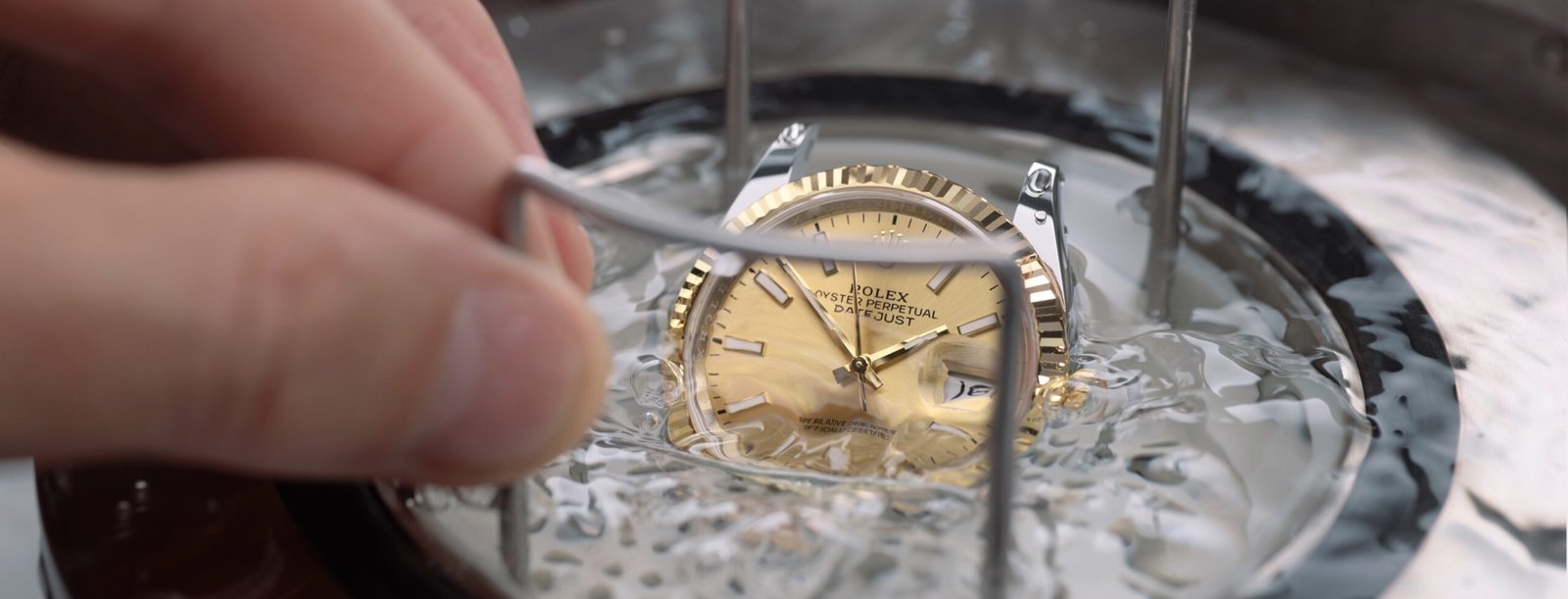
Welcome to our professional watch maintenance guide. In fact, a precision timepiece is not merely a daily accessory but a brilliant mechanical work of art. To maintain its long-term accuracy and factory luster, regular attention remains absolutely essential. Moreover, even the finest 1:1 super clone watches feature highly intricate caliber configurations that demand careful handling during daily generational wear.
Consequently, many collectors understand how to acquire premium references, yet they entirely overlook the fundamental principles of daily horological asset care. After establishing an elite collection, they gradually degrade movement stability through small, uncorrected habits. Therefore, avoiding these pitfalls will shield your investment flawlessly through proper watch maintenance.
Atelier Goal:
Let us dissect the eight most prevalent errors recorded during general watch maintenance workflows. By identifying these technical traps early, we can protect your beloved references and secure perfect timekeeping functionality for extensive years of use.
01 Exposing the movement to magnetic fields
In terms of technical hazards, mobile phones and laptops are actually not the primary sources of magnetism. Specifically, the real dangers rest within high-intensity speakers, television sets, magnetic bag clasps, and inductive phone cases. Magnetization causes rapid balance spring contraction, resulting in massive timing deviations or total movement failure.
Watch Maintenance Tip: Keep your luxury references entirely separated from localized magnetic fields. However, if your timing baseline changes abruptly, route the casing through a professional demagnetizer immediately to clear the hairspring.
02 Adjusting the date at the wrong mechanical time
Most automatic date-jump wheels fully engage the main gearing architecture between 10 PM and 1 AM nightly. Manually forcing the date corrector during this critical processing window will grind the fine metal teeth. For this reason, adjusting parameters here leads directly to broken components and calendar misalignment anomalies.
Watch Maintenance Tip: Always adjust your calendar values securely before 10 PM or comfortably after 1 AM. Furthermore, if you are uncertain of the current AM/PM stacking position, manually advance the hands past 12 o'clock to verify the jump point first.
03 Over-winding the mechanical mainspring
Excessive hand winding does not translate to improved power output metrics. Generally, a high-grade mainspring delivers optimal kinetic torque when tension remains balanced comfortably between 70% and 80% capacity. Consequently, forcing a fully wound barrel beyond its physical limit risks severe spring slippage or gear distortion.
Watch Maintenance Tip: Automatic super clone watches merely require consistent daily wear to maintain energy reserves naturally. For manual references, alternatively, cease rotating the crown the exact microsecond you feel initial operational resistance.
04 Incorrect operational use of chronograph functions
The chronograph mechanism operates via highly synchronized column wheels or horizontal clutch components. Improper execution—such as triggering a reset action while the second hand is moving actively, or operating pushers in reverse sequencing—shatters the intricate clutch fingers. Therefore, careless interactions compromise dial functionality completely.
Watch Maintenance Tip: Always manipulate the timers using the mandatory structural sequence: Start → Stop → Reset. Moreover, avoid operating the timing pushers completely while submerged under fluid environments.
05 Misunderstanding water resistance rating thresholds
A "100 meters water resistance" specification does not indicate a safe swimming depth parameter in practical consumer usage. Instead, it reflects baseline static laboratory pressure tolerances. For this reason, reference layouts require distinct defensive configurations relative to your current aquatic environment.
| Rating | Approved Operational Deployment |
| 30M / 3ATM | Accidental light splashes, light rain barriers |
| 50M / 5ATM | Standard hand washing, daily running water splash |
| 100M / 10ATM | Surface poolside swimming, shallow snorkeling paths |
| 200M / 20ATM | Short immersion dive exercises, marine watersports |
Crucial Reminder: No timepiece should ever enter hot baths, showers, or saunas. This is because high-temperature steam expands structural gaskets rapidly, allowing moisture to breach internal calibers seamlessly. Always confirm the screw-down crown is locked flat.
06 Excessive cosmetic polishing of the metal casing
Abrasive finishing treatments achieve luster by physically removing micron layers of stainless steel steel. Consequently, repeated polishing cycles round off original sharp lug bevels, compromise historical case symmetry, and erode specialized surface treatments like PVD gold plating. Therefore, over-restoration damages structural integrity permanently.
Watch Maintenance Tip: Limit structural polishing to extreme restoration events only. Furthermore, rely exclusively on elite watchmakers who maintain factory-grade geometric finishing machinery to preserve optimal edge sharpness.
07 Leaving the movement inactive for extended periods
Bespoke mechanical movements rely on uniform lubrication arrays across fine gear pivots. When a watch remains static for extensive months, the synthetic oils dry up or oxidize completely. Subsequently, triggering the wheel train causes accelerated friction damage, creating severe long-term timekeeping errors.
Watch Maintenance Tip: Manually wind or actively wear your stationary references 1–2 times monthly to keep the internal oils distributed fluidly. Alternatively, utilizing a premium watch winder is highly efficient for multi-watch collections.
08 Completely ignoring regular horological service windows
Just like a high-performance vehicle, a micro-mechanical instrument demands periodic calibration to survive extensive daily use. Neglecting routine maintenance schedules forces dry gear links to run under intense physical strain, eventually shortening the baseline lifespan of your prized mechanical movement.
Light Exterior Cleaning: Scheduled every 3–6 months utilizing soft cloths to dissolve daily residue across links and case surfaces.
Full Overhaul Service: Executed every 3–5 years involving full caliber breakdown, deep ultrasonic clearing, re-oiling, and pressure tracking.
Technical Benefit: Respecting these strategic professional intervals significantly expands internal wheel life, ensuring your high-end companion delivers pristine accuracy indefinitely.
Essential Watch Maintenance Protocols
In conclusion, master-grade custom allocations carry incredibly sophisticated mechanisms matching the behavioral parameters of authentic layouts. By executing proper wear sequences alongside consistent daily protection, your timepieces will maintain pristine, factory-fresh cosmetic luster and chronometric reliability decade after decade.
The Longevity Formula: Precise Wearing + Correct Daily Handling + Routine Maintenance = Immaculate Wrist Confidence Across 10+ Years.
Bespoke After-Sales Protection
To secure complete transactional confidence, all high-tier references leaving our facilities integrate an extensive 1-year movement warranty structure. If your micro-mechanical tracking caliber demands calibration or adjustments, please explore further timing assets inside our watch maintenance shop corridor. Our international concierge stands ready to coordinate logistics lines seamlessly.
wikifuchs CLIENT SHIELD PROGRAM